

If you’ve never heard of LitRPG, you’ve almost certainly seen the idea. In Jumanji, four teenagers get pulled into a video game, wake up with a list of strengths and weaknesses, and have to level up to get home.
Now imagine that as a series of novels. That’s LitRPG, short for “literary role-playing game”: stories where the world runs on game rules everyone can see, and the hero gets visibly stronger as the books go on. The genre’s flagship, Dungeon Crawler Carl, started as free chapters online and has since sold more than 14 million copies.
I published my own AI-assisted GameLit novel this year, Paladin 404: Welcome to the Dungeon, so this guide to how to write a LitRPG novel comes with some real lessons attached, including one decision I’d urge every new author in this genre to think about before they start.
What Readers Mean by LitRPG, GameLit and Progression Fantasy
These labels overlap, and readers use them carefully.

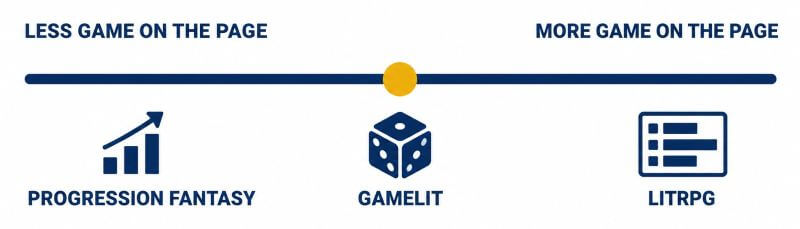
- LitRPG: the game is on the page. Stats, levels, skills and notifications, and readers enjoy watching the numbers climb.
- GameLit: a world with game-like elements, but lighter on the numbers.
- Progression fantasy: steady growth in power, with or without visible game mechanics.
This matters more than it looks. My book is a detective story in a dungeon with a game-like System, but it has very little stat crunch. LitRPG would have won more clicks. It would also have attracted readers expecting builds and numbers, and disappointed them. So the cover says GameLit. Choose the label that matches how much game is actually on the page.
Step 1: Choose Your Subgenre
Ask one question: what does your hero spend most of the story doing?
- Dungeon crawl or tower climb: floor-by-floor danger and escalating bosses.
- Crafting and trade: recipes, materials and a growing business.
- Base or settlement building: resources, defences and a town that levels up.
- Monster evolution: the hero starts as prey and evolves.
- Academy: rankings, exams, rivals and duels.
- Beast taming: raising and evolving creature companions.
- Cozy LitRPG: low stakes, a village shop, small victories.
- System apocalypse: the game arrives in our world.
Each one has readers who search for it specifically. Pick one you’d genuinely enjoy writing for a whole series.
Step 2: Write the Promise Before the Plot
Plot is easy to generate and hard to judge. A promise can be judged. Mine was one line: “The Dungeon isn’t breaking its rules. Someone is using them.” It told me what the book was about, what it wasn’t, and later became the core of the blurb.
Test yours. Does it give a reason to keep reading? Could it be broken? Does it tell you what the book is not?
Step 3: Design a Fair Game System
The system is the heart of the genre. Readers forgive a lot, but not rules that bend for the plot.
- Decide the rules first: how levels work, how skills are gained, what things cost, what the limits are.
- Make it fair: the rules apply to everyone, including the villain. Clever use of the rules is satisfying; breaking them without explanation isn’t.
- Give the system a voice: in many of the best books, the game’s notifications have a personality of their own, and it’s often where the humour lives.
- Write the rules down before you write chapter one, and don’t change them quietly.
Step 4: Keep Every Number Straight
This is the hard part of the genre, and it’s where my own book taught me most.
These books keep score in public. A skill used before it was learned, gold that was never there, a level that goes down without a reason: readers notice, and they say so in reviews. Across 30 chapters and a series, it’s genuinely difficult to track. The author of the genre’s biggest series reportedly kept a spreadsheet so large it crashed his computer.

What worked for me was keeping canon in files, not in my head or a chat history: a separate record for the system’s rules, each character’s continuity, and the story state (where everyone is, what they’re carrying, what’s just happened), updated after every chapter. My book’s in-world System records had also drifted into six different formats across 32 chapters, and they all had to be unified before the ebook and print files could be built.
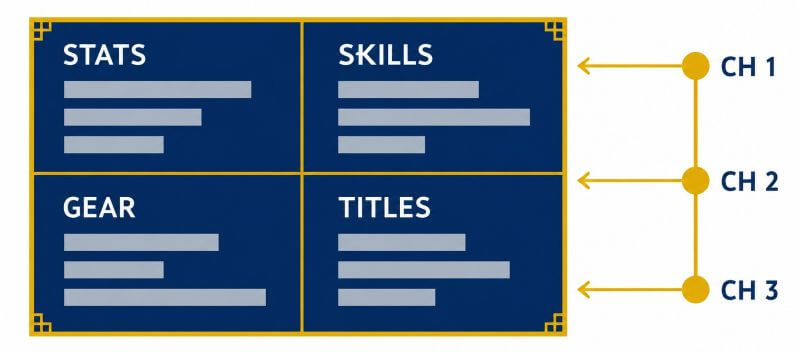
Whatever tool you use, keep a running score: stats, skills, gear and titles, with the chapter and reason for every change.
Step 5: Plan Every Chapter, and Lock the Ending
Readers binge this genre because progress is visible. Plan for it:
- end every chapter on a reason to read the next
- give the reader a visible win every few chapters: a new skill, a new rank
- make the hero struggle before they win
- decide the ending before you start, so you can plant what it needs
- leave something open for Book 2
I locked sixteen ending beats before chapter one. All sixteen are in the finished book, in order. Planning the end first is what made the clues fair.
Step 6: Draft, Then Actually Revise
Generating 80,000 or 100,000 words is no longer the hard part. Turning them into a book a stranger would pay for is.
Revise in batches against written rules: break up repetitive rhythms, separate character voices, add physical detail where scenes float, restore friction where things got too easy. Then do one cold read of the whole book in a fresh context. Mine caught things every earlier pass had missed, including a creature’s name used six chapters before the hero could have learned it.
Step 7: Package It Honestly
- Cover: character-led, bright, with a hint of the game. Judge every option at 160 pixels wide, the size it’s actually seen on Amazon.
- Blurb: hook, hero, the game, the stakes, the genre promise, and “Book 1 of” the series. Stop before the twist.
- Label and keywords: match what’s actually in the book.
Step 8: Think in Series and Kindle Unlimited
LitRPG readers often read through Kindle Unlimited and binge long series. Plan at least three books, have Book 2 underway as Book 1 launches, and put a Book 2 teaser in Book 1’s back matter.
Many authors build readers by serialising chapters first, often on Royal Road, before publishing. If your chapters are AI-generated, Royal Road’s policy requires you to tag them, so be honest and compete on quality. And remember KDP Select’s exclusivity rules if you plan to enrol the ebook in Kindle Unlimited.
LitRPG AI: A Studio Built for This Genre
When I wrote Paladin 404, I built my own system of files and checks around a general AI assistant to keep everything consistent. LitRPG AI, from Cindy Donovan, is a studio built specifically to handle that for this genre:
- ten story types, nearly 60 hero cards (including middle-aged and experienced heroes) and eight voices for the game
- a Series Map for the world, its rules and the facts that must stay true
- chapter plans you can read and edit for free before anything is written
- a running score of stats, skills, gear and titles, handed to the writer before every chapter
- a free check on every chapter’s game boxes for 14 kinds of slip
- Book 2 that picks up from how Book 1 ended, score included
- a cover, listing copy and a KDP kit with the paperback, cover wrap, EPUB and ebook cover
- three pen names, each with a one-click author website
The AI is built in, with no ChatGPT subscription or API keys, and it’s one payment from $17, depending on how many credits you want. The team wrote their own Book 1 (about 79,000 words, 284 printed pages) in it as a demonstration.
My Verdict
The thing I’d have paid for is the score-keeping. It’s the problem I solved by hand with files and checklists, and it’s the error readers of this genre punish most. A studio that hands the writer the hero’s numbers before every chapter and checks the game boxes afterwards is aimed squarely at the hardest part of the job.
It won’t make the authorial decisions for you, and it shouldn’t. You’ll still need to choose your label honestly, read and approve every chapter, revise, and package the book well. But as the engine for a LitRPG series, it’s built around the right problem.
My Bonuses If You Pick It Up
If you buy LitRPG AI through my link, I’ll send you four reports:
- Royal Road to Kindle Unlimited: the serial-first launch path, adapted honestly for an AI-assisted series
- What LitRPG Readers Actually Expect: labels, subgenres, must-have tropes and deal-breakers
- LitRPG Cover, Blurb & Keyword Kit: the thumbnail test, a blurb formula and keyword phrases
- What I Learned Publishing Paladin 404: my own case study, mapped against what the studio does for you
See LitRPG AI and my four bonuses here ?
Frequently Asked Questions
What is a LitRPG novel?
A novel where the world runs on game rules that the characters can see, such as levels, skills and stats, and the hero grows stronger as the story progresses.
What’s the difference between LitRPG and GameLit?
LitRPG puts the game mechanics on the page, with visible stats and numbers. GameLit has game-like elements but is lighter on the numbers.
How long is a LitRPG novel?
Often long. Around 80,000 words is a common target, and many popular books run much longer, which suits Kindle Unlimited readers.
Can I write LitRPG with AI?
Yes, but you need a way to keep the numbers and facts consistent across the whole series, and you should read, edit and approve every chapter. Disclose AI use where platforms such as KDP and Royal Road require it.
Disclosure: this post contains affiliate links. If you buy through one of them I earn a commission at no extra cost to you.
